Over the past two decades,
China’s pharmaceutical and healthcare industry has undergone a profound transformation.
Innovative drugs have continued to achieve breakthroughs and expand onto the
global stage, while the medical device sector has evolved from
manufacturing-led advantages toward independent innovation and global
competition. China’s life sciences industry is rapidly entering a new stage of
innovation-driven development.
The medical device sector, in
particular, is becoming an important force driving industry innovation.
Industry research shows that China is now the world's second-largest medical
device market after the United States. The market expanded from RMB 729.8 billion
in 2020 to RMB 941.7 billion in 2024, indicating a compound annual growth rate
of 6.6%. It is estimated that this figure will reach RMB 1.8134 trillion by
2035. ¹
Approvals
of innovative medical devices are also accelerating. In 2025, China's National
Medical Products Administration approved 76 innovative medical devices, an
increase of 17% year on year. These approved products span a range of emerging
fields, including artificial intelligence, radiation oncology and biomedical
materials.
Behind the rapid growth,
medical device R&D itself is also undergoing profound change. Innovation is
no longer simply about a breakthrough in a single technology. It has become a systematic
undertaking spanning product design, clinical evaluation, regulatory
registration, quality systems and global market access. This places increasingly
high demands on companies' R&D systems, regulatory capabilities, and cross-functional collaboration.
This industry
transformation has also been a defining thread throughout the more than
two-decade career of Yifei Peng, Executive Vice President and Chief Operating
Officer of Tigermed, General Manager of Tigermed-Jyton, and General Manager of
the Taiyuan Pharmaceutical Innovation Research Institute. From R&D services
to innovation incubation, the broader Tigermed ecosystem is participating in
this transformation through an increasingly integrated set of capabilities.
Across
R&D, Investment and Clinical Development: Witnessing the Growth of
Healthcare Innovation in China
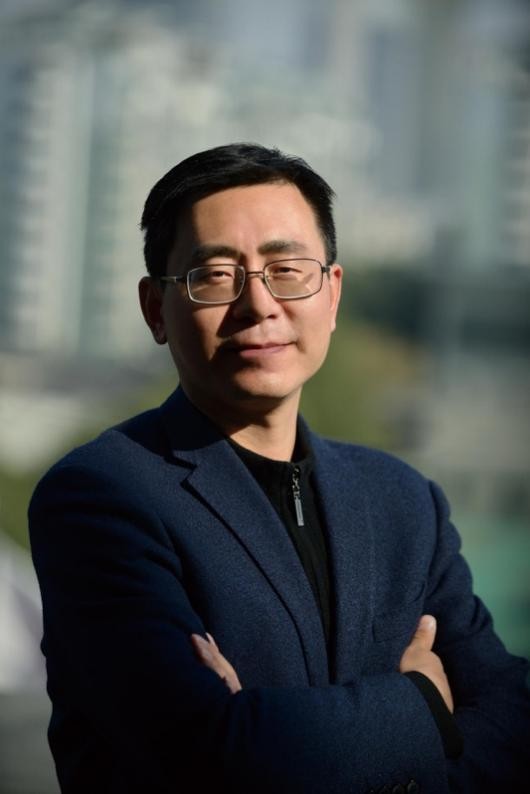
Yifei Peng
Executive Vice President and Chief Operating Officer, Tigermed
General Manager, Tigermed-Jyton
General Manager, Taiyuan Pharmaceutical
Innovation Research Institute
From recombinant protein drug research to manufacturing management,
corporate investment, and the clinical development and registration of drugs
and medical devices, Yifei Peng has worked across many critical stages of the
healthcare innovation value chain.
"I have been fortunate to witness and participate in a period of
rapid growth in China's healthcare industry."
Looking back on his career, Peng believes that his experience across
R&D, manufacturing, investment and clinical development has shaped one
lasting habit: always thinking about innovation from the perspective of a
product’s full lifecycle.
"When I first
started working in drug development, the term ‘innovative drug’ was not
widely used in China. People more commonly referred to them as ‘Class 1 new
drugs.’ At that time, the industry had not developed a comprehensive
understanding of how a product could progress from research into clinical
development and ultimately obtain regulatory approval."
Peng
later moved into corporate investment, where he participated in the evaluation
of innovative projects and their translation into commercial applications.
"Different
roles allowed me to see different sides of the same technology. R&D teams
focus on whether a product can actually be developed. Manufacturing teams need
to determine whether it can be produced consistently and reliably. Investors,
meanwhile, are more concerned with what clinical problem the technology can
solve and whether it has commercial value."
For
Peng, R&D, manufacturing, regulatory registration, clinical development and
commercialization are not separate processes. Together, they form a closely
connected innovation chain, and a weakness at any stage can affect whether the
innovation can ultimately be brought to fruition.
This
experience across R&D, manufacturing, investment and clinical operations has
also become an important foundation for his leadership of Tigermed-Jyton.
In 2023,
the Taiyuan Pharmaceutical Innovation Research Institute, co-established with
the participation of Tigermed, was founded in Hangzhou. The institute focuses
on early-stage translation and incubation across three major areas: innovative
drugs, traditional Chinese medicine, and medical devices. Peng also serves as
its General Manager, providing a new platform for the experience he gained
earlier in evaluating innovative projects and supporting their translation into
commercial applications.
From Manufacturing Strength to
Innovation Breakthroughs: China’s Medical Device Industry Enters a New Stage
For Peng, the changes in China's medical device
industry over the past decade reflect the continuous advancement of the sector’s
overall capabilities.
In the past, international companies held a long-standing advantage in
certain high-end medical equipment used by major Chinese hospitals, including
CT and MRI systems. The industry also faced constraints in areas such as stent
materials, core components for medical imaging equipment and advanced
manufacturing processes, due to limitations in foundational technologies and
supply-chain capabilities.
"Medical devices are a highly interdisciplinary field. In the past, some key materials used in
stents could not yet be produced domestically, while certain core components
for CT systems had to be imported. If any foundational link in the chain fails
to keep pace, product innovation can be affected."
Peng believes that medical device innovation depends on a complete
industrial ecosystem. Progress in materials science, engineering capabilities,
supply chains, scientific and technical talent, and clinical resources must
occur together before a new product can move successfully from concept to
real-world application.
China has a comprehensive manufacturing system and a large pool of
engineering talent. Once critical technical bottlenecks are overcome, the pace
of industry catch-up often accelerates significantly.
As these capabilities continue
to improve, the basis of competition is also changing.
In the past, some companies
focused primarily on obtaining regulatory approval as quickly as possible while
controlling costs. Today, more companies are beginning to consider a product’s
innovative value, clinical needs, evidence strategy, and international market
positioning at an early stage of development.
This means that medical device
companies no longer need support for only one part of the R&D process.
Increasingly, they need long-term partners that can participate in overall
product development planning and support the product throughout its lifecycle.
From Single-Service Support to Full-Lifecycle
Partnership: The Evolving Value of Medical Device CROs
"In the past, outsourcing
was often limited to individual stages. Today, the industry is moving toward
full-service, long-term strategic partnerships."
Peng believes that the main
driver behind this shift is the increasing complexity of innovative medical
device development.
"When international
companies first entered the Chinese market, their needs were largely focused on
regulatory registration. As China’s medical device regulatory framework has
continued to evolve, professional requirements for clinical evaluation and
regulatory submissions have become increasingly demanding. Clients now seek
integrated support across product strategy, medical and clinical planning, data
management, statistics, quality management, and post-market studies."
Innovative companies feel this
need particularly strongly. Many teams have excellent technical capabilities
but limited headcount, making it difficult to build complete in-house functions
across medical affairs, regulatory affairs, clinical operations, data
management, statistics, and quality management.
A partner that truly understands
the full product lifecycle can help companies identify critical development
issues earlier, reduce repeated trial and error, and improve overall R&D
efficiency.
This has also become a core
direction for the long-term development of Tigermed-Jyton.
Founded in 2000, Tigermed-Jyton
was one of the earliest platforms in China to focus on medical device R&D
services. In 2017, Tigermed completed its full acquisition of Jyton. Tigermed
subsequently integrated its internal medical device capabilities with the Jyton
team, establishing a unified Tigermed-Jyton medical device service platform.
Over the years, Tigermed-Jyton
has developed
a full-lifecycle service offering covering product strategy, regulatory
submissions, clinical trials, medical support, data management, statistical
analysis, quality management, and post-market studies. The company has also
built deep expertise across innovative fields including oncology,
cardiovascular care, ophthalmology, medical aesthetics, digital health and
robotics.
Asked to summarize
Tigermed-Jyton’s strategic positioning in three terms, Peng identified three
priorities: full lifecycle, expertise and compliance, and global
connectivity.
Full lifecycle means that
services begin at the early product planning stage and extend through R&D,
clinical trials, registration and post-market phases. “Our value lies not only
in project execution. More importantly, we help companies define the right
development pathway early on and reduce trial-and-error costs,” Peng explained.
The Taiyuan Pharmaceutical Innovation Research Institute, established in 2023,
complements Tigermed-Jyton through a “services + incubation” model for
early-stage innovation.
Expertise and compliance ensure
that project quality meets the regulatory and review requirements of each
target market. As medical device development becomes increasingly global,
innovative products may be reviewed under different regulatory frameworks,
including those of the U.S. FDA and the European Union. Product classification,
clinical evidence, quality-system requirements and post-market regulatory
requirements vary from market to market. Project teams therefore need to
develop strategies tailored to each target market rather than simply
repurposing the same dossier across jurisdictions.
“Our research and technical
documents are increasingly subject to review by international regulatory
agencies. The team should understand the regulatory requirements of the
different markets and incorporate these requirements into every detail of the
project execution.”
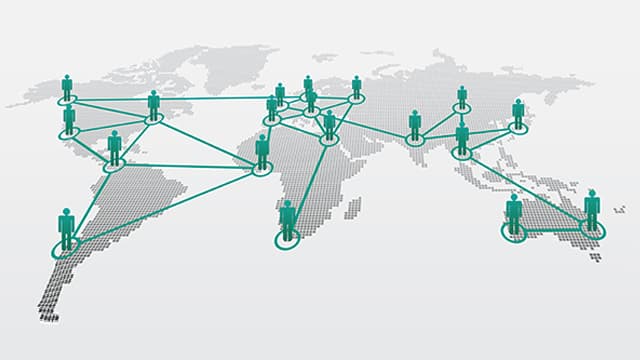
The company's global
connectivity comes from Tigermed's years of international expansion. Tigermed's
global R&D service network enables Tigermed-Jyton to provide regulatory
strategy, clinical trial design and operational management support in China, Europe,
the United States, Southeast Asia and other markets.
Peng summarizes the approach as
“global strategy, local execution.” While the overall strategy remains
consistent, local teams draw on their deep understanding of local regulations,
healthcare systems, research institutions and communication practices to ensure
high-quality delivery.
From
Chinese Innovation to Global Markets: Medical Device Companies Accelerate
International Expansion
As China's medical device
capabilities grow, more companies are looking overseas. Peng has observed a
clear shift in how Chinese medical device companies approach international
expansion.
“In the past, the export of
low-value consumables dominated. Today, more companies are taking their own
products and technologies into overseas markets, building international
registration, global clinical research and commercialization capabilities.”
“One clear change is that
Chinese medical device companies are increasingly active in global competition.
At major events such as MEDICA in Germany, the presence of Chinese exhibitors
continues to grow. They are showcasing not only manufacturing capabilities, but
also innovation and brand strength.”
As more innovative Chinese
medical devices target the United States, Europe and emerging markets, R&D
service providers must also build global capabilities, including the ability to
integrate resources and manage projects across regions.
“We create detailed pathways
based on the target market's local regulations, clinical resources, and
operational realities. Mature and emerging markets present different
challenges, so our solutions must adapt accordingly.”
Meanwhile, competition in the
Chinese market is impacting the decisions of overseas enterprises.
In the past, when certain
overseas enterprises entered the Chinese market, their focus was more on
channels and business cooperation. Nowadays, they need to assess the innovation
level, clinical value and price competitiveness of their products.
“They
will consider whether their products are sufficiently innovative and whether
their pricing can remain competitive with products from Chinese companies.”
This development reflects the increasing competitiveness of China's
medical device industry. China is no longer simply an important growth market
for international companies. It is becoming a major arena for global medical
device innovation and competition.
From Head of Medical Device Business to Group COO: Upgrading Global Operations
In 2026, Yifei Peng formally
became Chief Operating Officer of Tigermed. The new role has broadened both his
responsibilities and his perspective.
Previously, his focus was mainly
on the growth of one business platform, client needs and project delivery. At
the group level, his focus has shifted to executing the overall strategy and
improving collaboration across businesses, regions and functions.
As Tigermed’s global footprint
continues to expand, its operational network is becoming increasingly complex.
Countries and regions differ in their regulatory environments, healthcare
systems, client needs and working practices. The group must maintain consistent
quality standards and strategic direction while fully respecting local teams’
professional judgment and ability to execute efficiently.
“I want
to further strengthen the support provided by our corporate functions, help
business teams work more efficiently, and build closer collaboration across
regions and business lines. By working together, we aim to support Tigermed's
global expansion.”
For Peng, the objective of a
global operating model is not only to improve efficiency, but also to enable
teams around the world to collaborate around unified quality standards and
client value, while facilitating global resource sharing and efficient local
execution.
Witnessing Industry Growth, Driving Global Innovation
From a three-person team to a medical device innovation
platform serving clients worldwide, Peng has grown alongside China’s medical
device industry as it moved from catch-up to global competition. As his
responsibilities have expanded, his focus has remained the same: helping
clinically valuable products avoid unnecessary detours, move through
development faster, reach the clinic sooner and ultimately benefit patients.
Moving forward, the growing application of AI in drug
R&D, together with the deeper integration of digital health, robotics and
advanced interventional technologies with the healthcare industry, will create
more opportunities for China’s pharmaceutical and healthcare sector to expand
globally. Drawing on its global R&D service network and full-lifecycle
capabilities, Tigermed will continue to connect innovation, clinical
development and markets through global collaboration, local execution, professional
expertise and regulatory compliance, helping more clinically valuable
innovations reach patients and markets worldwide.
About Tigermed-Jyton
Tigermed-Jyton (Beijing) Pharmaceutical Technology Co.,
Ltd. is a wholly owned subsidiary of Tigermed (stock codes: 300347.SZ/3347.HK).
Founded in 2000, it is a leading China-based CRO specializing in regulatory
affairs and clinical research for medical devices, including in vitro
diagnostic products, with services spanning the full product lifecycle. Over
the past two decades, the company has built long-term partnerships with more
than 1,900 medical device developers and manufacturers in over 30 countries.
Its professional services help clients reduce registration risks, shorten
project timelines, reduce R&D costs and accelerate commercialization.
Reference
1.
Frost & Sullivan (2025). Blue
Book on the Current Situation and Trends of Internationalization of Medical
Devices in China 2025